Event
High-impact IT : when Sustainable IT delivers ROI for CIOs


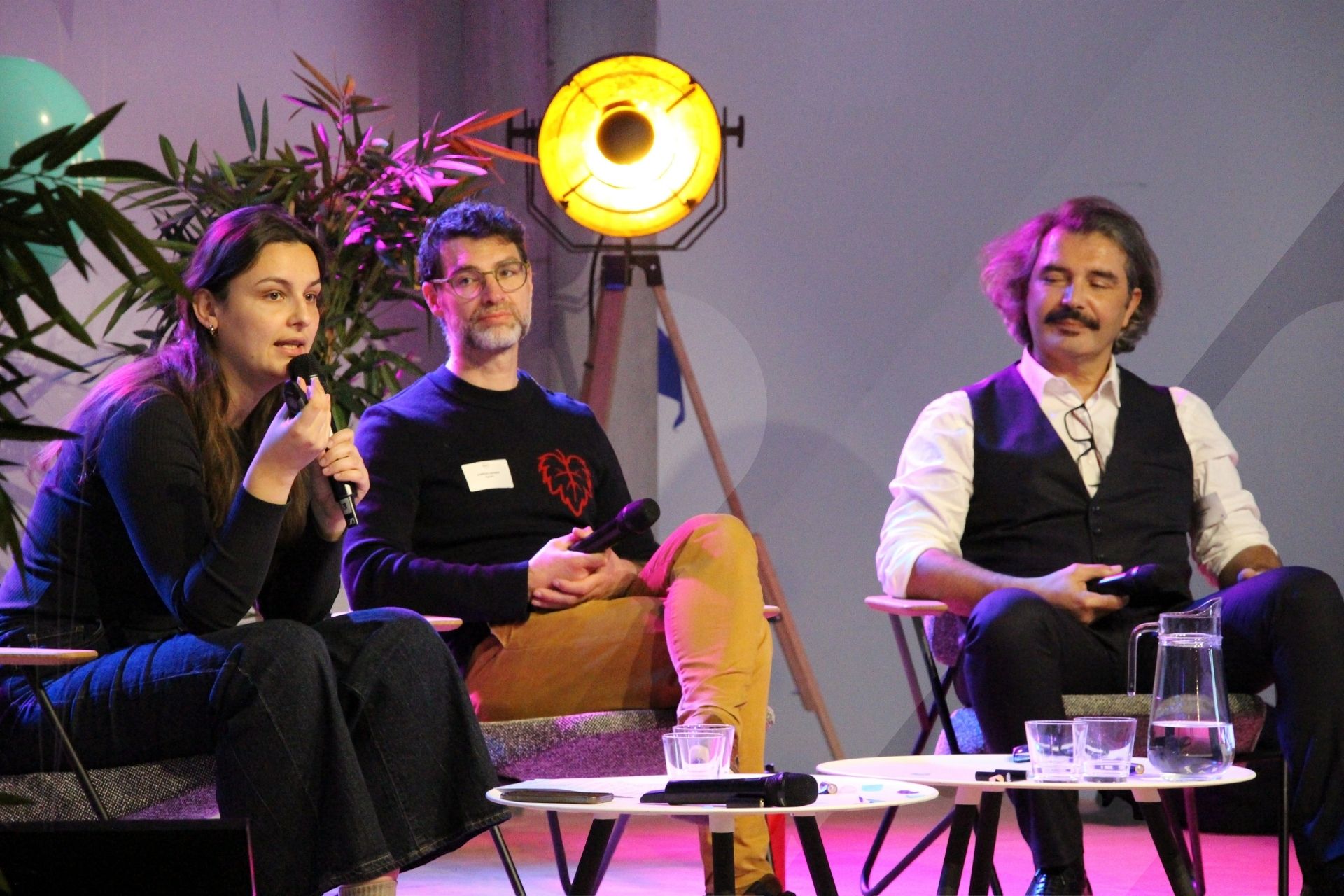
On 17 March, the Sustainable Digital Day took place, an event organised for the past four years by the ‘ADN Ouest’ association in Nantes, bringing together all local stakeholders committed to a more ethical and virtuous digital industry. During the event, Matthieu Poulard, CEO and co-founder of Aguaro, spoke at the round table discussion “High-impact IT : when Sustainable IT delivers ROI for CIOs”, hosted by Lucie Boigné, Senior Consultant at Wavestone, alongside Naïm Rebouh, Data Centre Infrastructure Architect within the IT department of La Poste’s Consumer and Digital Division (BGPN).
The primary objective of this round table, which alternated between conceptual framing, feedback and practical recommendations, was to address Sustainable IT not from the usual – albeit crucial – environmental or ethical angle, but from that of the financial and operational performance of CIOs.
Let's take a look back at the key insights and recommendations from this talk.
Sustainable IT: an undervalued decision-making, performance and resilience lever
A multidimensional ROI
Beyond reducing environmental impacts – carbon footprint, resource use (water, critical raw materials, amongst others), biodiversity… – , the ROI of responsible digital includes various types of benefits:
Financial: implementing and rolling out a responsible digital strategy allows IT costs to be controlled and reduced, whether in terms of energy expenditure (by streamlining the application portfolio or reassessing the need for oversized servers, for example) or the purchase of new equipment by extending the lifespan of existing IT devices.
Social: digital accessibility ensures that digital content and services are understandable and usable by as many people as possible. Furthermore, a robust, data-driven and long-term responsible digital strategy – and, more broadly, a CSR strategy – strengthens the employer brand and encourages talent retention, as professionals are increasingly attentive to their organisation's ambition and sincerity regarding environmental commitments.
Reputational and business: just as with attracting and retaining people, concrete and well-considered long-term actions contribute positively to an organisation’s brand image. For B2B players, particularly tech companies, environmental commitment is becoming a selection criterion and/or a differentiating factor in a growing number of tenders.
A powerful driver of performance, a Green IT strategy also enables organisations to tackle a wide range of critical risks: non-compliance (with international and local regulations), cybersecurity (quality of inventories, technical debt…), energy dependencies – Europe imports over 90% of its fossil fuels* – or raw material dependencies – every PC or phone contains over 50 different metals, half of which are at risk of shortage according to the EU.
A budget that remains marginal, nonetheless
Figures are confidential, but the budget allocated to responsible digitalisation remains insignificant compared to the overall IT budget of a large organisation – well below 0.01% versus the 5 to 10% allocated to cybersecurity – even though the potential gains are substantial: a 20–40% reduction in datacenter energy consumption, a 10–25% reduction in cloud-related costs, or a 10–15% reduction in procurement costs through a circular IT approach and the purchase of refurbished devices, according to the association SustainableIT.org.
Financial metrics and carbon metrics are not mutually exclusive: on the contrary, they complement one another, shed light on grey areas, and fuel decision-making.
The explosion of AI’s impacts
The uses of artificial intelligence – particularly generative AI – are growing exponentially and bringing with them an equally sharp rise in associated costs, dependencies and risks. Yet the financial ROI of AI is rarely measured, the impacts remain poorly understood and the associated environmental benefits [such as AI for Green, for example, ed.] are still scarcely quantified. It is therefore urgent to apply the same management logic – both financial AND environmental – based on the GreenOps/FinOps model.
Building, operationalising and securing your Sustainable IT strategy
As this roundtable has shown, Sustainable IT is not an additional cost; it is a powerful lever for delivering real and measurable benefits. And the key to the successful roll-out of this approach and its sustainability lies in implementing a data-driven strategy – right from the start – along with executive sponsorship and the involvement of operational staff. Several recommendations were shared.
Measure & test
Measurement is essential: as the ‘cornerstone’ of any initiative, it reveals hidden environmental – among other – costs.
Getting started with concrete pilot projects, with a clearly defined scope, enables you to quickly obtain tangible proof of value.
Secure top executive support
Quantifying the gains in euros, tonnes of CO₂, and kilowatt-hours is essential to convince top management, anticipate future IT cost structures, define a meaningful strategy, and implement appropriate action plans. “Not all euros are equal”, according to Matthieu Poulard, referring to cost volatility due to fossil fuel dependencies.
One person alone cannot carry this major initiative: it is essential to form a core team with clear governance whilst relying on operational liaisons within the various teams, who will provide their on-the-ground expertise.
Get teams on board
Involving operational staff at the earliest possible stage is essential, even with incomplete data: as “guardians” of the information, their questions improve data reliability and foster a sense of ownership of the issue.
Avoiding technical jargon and adapting to the vocabulary – and expectations – of stakeholders (project or product managers, finance staff or decision-makers) facilitates understanding and buy-in.
Training teams – via MOOCs or certifications – helps raise awareness of the challenges and best practices of Sustainable IT.
Relying on peer comparison and highlighting best practices rather than top-down programmes encourages emulation and individual action.
Control rebound effects
Questions about usage must be asked systematically and explicitly: optimisation must first aim to eliminate unnecessary capacity, not automatically reallocate it.
Every new project must be eco-designed; placing these constraints on project managers and engineers may seem challenging, yet it fosters innovation and ultimately reduces costs.
Thank you to ADN Ouest, Lucie Boigné and Naïm Rebouh for this inspiring discussion!
* source : Eurostat
** source : Wavestone